
The Conversion of Saul
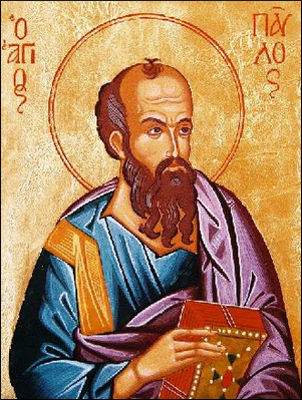 Acts 9 opens with, “Then Saul, still breathing threats and murder against the disciples of the Lord, went to the high priest and asked letters from him to the synagogues of Damascus, so that if he found any who were of the Way, whether men or women, he might bring them bound to Jerusalem.”
As we saw in The Martyrdom of Stephen, Saul consented to his death and set out to persecute and arrest anyone who followed the teaching of the apostles or their disciples. That was one of the reasons Philip was in Samaria. Notice the word “Way”. This is also another term used in the New Testament to refer to Christians.
So who was Saul, and why did he have such a hatred of “Christians”? Saul was born Paulus (Paul) around 5 AD in the Roman city of Tarsus in Cilicia (Southern Turkey). His parents were Hellenist Jews, with Roman citizenship, therefore also making him a Roman citizen. His native language was Greek, but he claimed Hebrew parentage through the tribe of Benjamin. [Phil#3:5]
Around 10 AD, Paul’s family moved to Jerusalem and he became a tent maker, a trade he would maintain throughout his life. Some time between 15-20 AD, he began his study of the Hebrew scriptures under Gamaliel. You will remember him from the trial of Stephen. Under his Hebrew name of Saul, he became a zealous Pharisee. Being young, he did not have the wisdom of Gamaliel, and his zeal for the strict adherence to the Jewish faith caused him to be extremely intolerant of anyone following the teaching of the apostles or their disciples.
Of all the Pharisees and Sadducees in Jerusalem, Saul was the one who had the greatest hatred towards people of the “Way”, and he made it his personal mission to stamp the movement out, before it could gain too much of a hold on the Jewish people.
So in Acts 9, we see him asking for authority to hunt them down in the northern Syrian city of Damascus, where his own people (Hellenist Jews) lived; and bring them back to Jerusalem, under arrest.
“As he journeyed he came near Damascus, and suddenly a light shone around him from heaven. Then he fell to the ground, and heard a voice saying to him, ‘Saul, Saul, why are you persecuting Me?‘
And he said, ‘Who are You, Lord?’
Then the Lord said, ‘I am Jesus, whom you are persecuting. It is hard for you to kick against the goads.‘”
Being a Pharisee, Saul would have known from scripture that such an experience could only be the work of God, hence the word “Lord”. But he definitely would not have expected it to be Jesus! And what is a goad? It was a stick with a steel tip, used to poke oxen to keep them moving. Often they would kick against the goad that caused the pain, only making it worse. Jesus was implying Saul was fighting a losing battle trying to fend off the people of the Way.
“So he, trembling and astonished, said, ‘Lord, what do you want me to do?’
Then the Lord said to him, ‘Arise and go into the city, and you will be told what you must do.‘”
Saul would have also known that such experiences were rare and only used when there was an important issue at stake, usually requiring some action to be taken.
“And the men who journeyed with him stood speechless, hearing a voice but seeing no one. Then Saul arose from the ground, and when his eyes were opened he saw no one. But they led him by the hand and brought him into Damascus. And he was three days without sight, and neither ate nor drank.”
The people travelling with him did not see the light. They heard a voice, but Luke does not say whether it was that of Saul or Jesus speaking. As we will see in a moment, the experience left Saul unable to see anything at all, and effectively blind.
“Now there was a certain disciple at Damascus named Ananias; and to him the Lord said in a vision, ‘Ananias.‘ And he said, ‘Here I am, Lord.’” Luke doesn’t say who Ananias was, only a “disciple” and one who did not seem to think it at all strange for Jesus to be talking to him in a vision.
“So the Lord said to him, ‘Arise and go to the street called Straight, and inquire at the house of Judas for one called Saul of Tarsus, for behold, he is praying. And in a vision he has seen a man named Ananias coming in and putting his hand on him, so that he might receive his sight.‘
Then Ananias answered, ‘Lord, I have heard from many about this man, how much harm he has done to your saints in Jerusalem. And here he has authority from the chief priests to bind all who call on your name.’
But the Lord said to him, ‘Go, for he is a chosen vessel of mine to bear my name before Gentiles, kings, and the children of Israel. For I will show him how many things he must suffer for my name’s sake.‘”
Ananias seems quite comfortable arguing with Jesus, questioning why he would want to restore the sight of such an enemy of his disciples. But Jesus simply says “Go”, because he has plans for Saul. And they would involve preaching to the Gentiles as the Lord’s “chosen vessel”. He would also suffer “many things” in the process – and he did!
“And Ananias went his way and entered the house; and laying his hands on him he said, ‘Brother Saul, the Lord Jesus, who appeared to you on the road as you came, has sent me that you may receive your sight and be filled with the Holy Spirit.’ Immediately there fell from his eyes something like scales, and he received his sight at once; and he arose and was baptized. So when he had received food, he was strengthened. Then Saul spent some days with the disciples at Damascus.'”
Notice the words “Brother Saul”. Ananias was visiting Saul as a messenger of Jesus, with authority from Jesus, knowing that Saul was destined to be a brother-in-arms. As such, he had the authority to lay his hands on Saul so Jesus could restore his sight and fill him with the Holy Spirit. This physical act would have also confirmed that Saul had not been dreaming about his encounter and that it was real.
“Immediately he preached the Christ in the synagogues, that he is the Son of God. Then all who heard were amazed, and said, ‘Is this not he who destroyed those who called on this name in Jerusalem, and has come here for that purpose, so that he might bring them bound to the chief priests?’ But Saul increased all the more in strength, and confounded the Jews who dwelt in Damascus, proving that this Jesus is the Christ.'”
It is not surprising that people were sceptical of Saul’s sudden change of heart, after all his vicious reputation was well known and preceded him. For some, it was too much, and the hunter became the hunted.
At this point in Acts, Luke suddenly makes a jump of three years, without any explanation. So why did Luke make the jump? Was it an error? No, it’s because he didn’t know what happened during that time. Saul left Damascus and preached in Arabia, so Luke continues his account from when Saul returns:
“Now after many days were past, the Jews plotted to kill him. But their plot became known to Saul. And they watched the gates day and night, to kill him. Then the disciples took him by night and let him down through the wall in a large basket.”
The clue here is “many” days. To find out what that means, we need to see what Paul said in his own Epistles:
“But when it pleased God, who separated me from my mother’s womb and called me through his grace, to reveal his Son in me, that I might preach him among the Gentiles, I did not immediately confer with flesh and blood, nor did I go up to Jerusalem to those who were apostles before me; but I went to Arabia, and returned again to Damascus. Then after three years [since conversion] I went up to Jerusalem to see Peter, and remained with him fifteen days.” [Gal#1:15-18]
However, when he did return from Arabia:
“At Damascus, the governor under King Aretas was guarding the city of Damascus in order to seize me, but I was let down in a basket through a window in the wall and escaped his hands.” [2 Corinthians#11:32-33]
Aretas was King of the Nabatean Kingdom which was called Arabia at the time. He was the father-in-law of Herod Antipas (Herod the Tetrarch), whose divorce from Aretas’ daughter and marriage to Herodias resulted in the beheading of John the Baptist.
Herod’s army was wholly destroyed in 36 AD. Aretas, taking advantage of the complications of the times on account of the death of the Emperor Tiberius the next year, took possession of Damascus.
So, Saul must have upset Aretas while in Arabia and when he returned to Damascus, found it was under his control. Consequently, Saul was hunted by Aretas and had to be helped to escape Damascus and flee to Jerusalem.
Notice he says he did not confer with “flesh and blood”, nor go to see the apostles. He did not receive teaching from any man, but was guided directly by Jesus and the Holy Spirit in preaching the Gospel to the Gentiles of Arabia. The Nabateans were not Jews, but claimed parentage through the tribe of Ishmael. So by the time Paul did go to Jerusalem to see the apostles, he had been teaching for around three years, establishing his credibility as the “apostle to the Gentiles”, “For I speak to you Gentiles; inasmuch as I am an apostle to the Gentiles, I magnify my ministry.” [Rom#11:13]
Finally, Luke writes:
“And when Saul had come to Jerusalem, he tried to join the disciples; but they were all afraid of him, and did not believe that he was a disciple. But Barnabas took him and brought him to the apostles. And he declared to them how he had seen the Lord on the road, and that He had spoken to him, and how he had preached boldly at Damascus in the name of Jesus. So he was with them at Jerusalem, coming in and going out.”
The reason the disciples and apostles would have believed Barnabas is, because he was a Pharisee and both he and Saul had been taught together under Gamaliel.
“And he spoke boldly in the name of the Lord Jesus and disputed against the Hellenists, but they attempted to kill him. When the brethren found out, they brought him down to Caesarea and sent him out to Tarsus.”
Paul gives his own account of what happened in Jerusalem in Acts 22:17-21,
“Now it happened, when I returned to Jerusalem and was praying in the temple, that I was in a trance and saw Him [Jesus] saying to me, ‘Make haste and get out of Jerusalem quickly, for they will not receive your testimony concerning Me.’ So I said, ‘Lord, they know that in every synagogue I imprisoned and beat those who believe on You. And when the blood of Your martyr Stephen was shed, I also was standing by consenting to his death, and guarding the clothes of those who were killing him.’ Then He said to me, ‘Depart, for I will send you far from here to the Gentiles.’ ”
So, from then (37 AD) until Barnabas is sent to seek him out in Acts 11:25 (46 AD), Saul had nothing to do with the Jerusalem disciples and set up assemblies in Tarsus and areas around Cilicia.
Now free from both the actual and perceived persecution from Saul:
“Then the churches throughout all Judea, Galilee, and Samaria had peace and were edified. And walking in the fear of the Lord and in the comfort of the Holy Spirit, they were multiplied.”
The importance of Saul as the apostle Paul cannot be overstated. His Epistles make up nearly half the books of the New Testament and a large portion of Acts. Luke was not always with Paul on his missionary journeys so, as the author of Acts, discrepancies do occur in many places. My aim is to concentrate mainly on the formation and early growth of Christianity, not to simply reprint Acts or any other book. So I will try to stay on topic wherever possible.
As we will see next, Peter preached to a Gentile, fulfilling the third part of “The Great Commission” given to the original apostles.